English| EUR
Suggested for you
More currencies
Choose a language
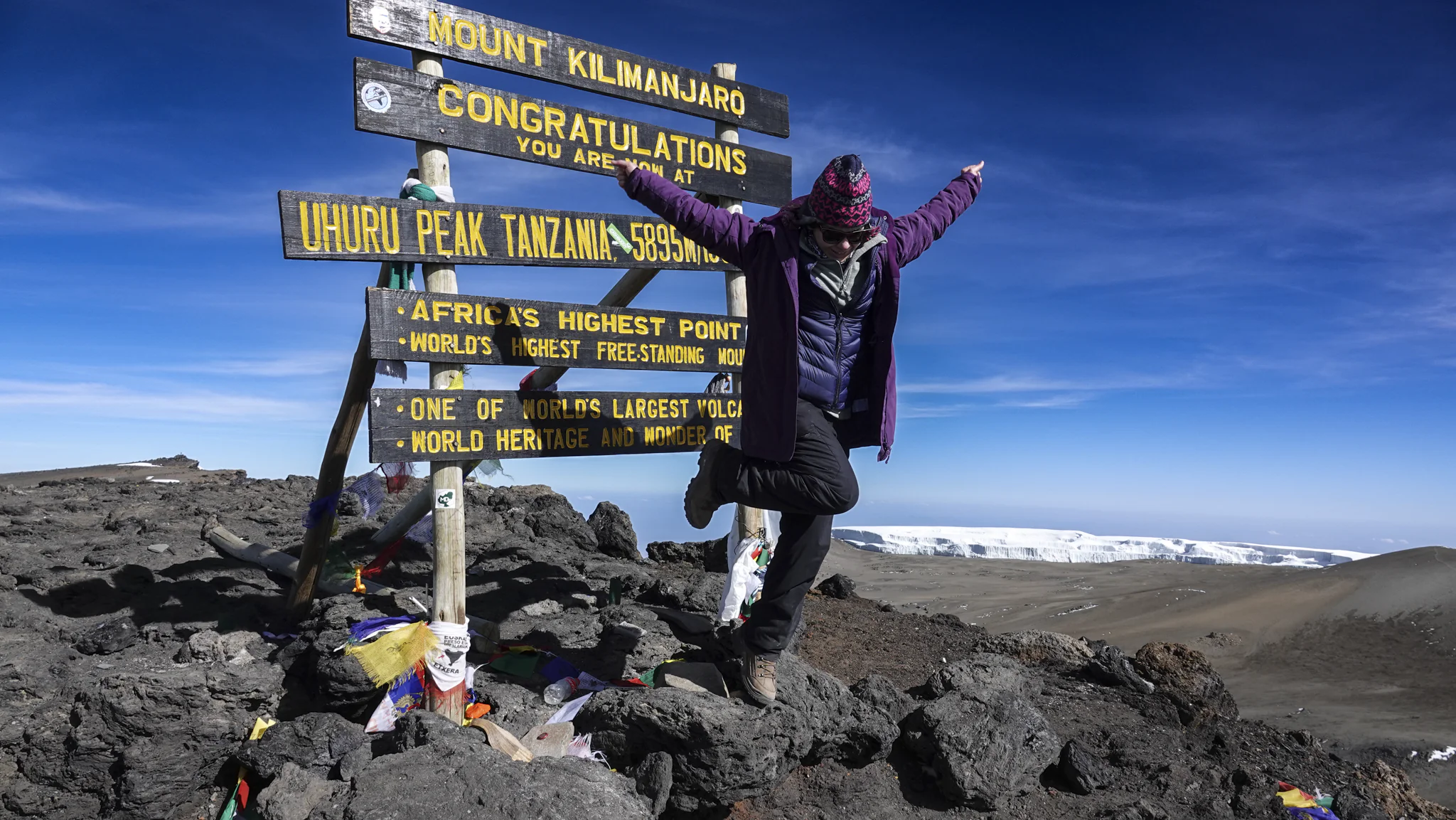
Mount Kilimanjaro rises 5,895 meters above sea level, making it the highest free-standing mountain on Earth. The question of whether you can complete the climb in a single day reflects a common misunderstanding of how high-altitude ascents work. This guide explains the physiological constraints, park regulations, and the day-hike options that do exist on the mountain.
Quick answer
No, you cannot climb Kilimanjaro to the summit in a day. All summit routes require a minimum of five days, with most climbers taking six to nine days to allow proper acclimatization. Kilimanjaro National Park does not permit single-day summit attempts due to severe altitude sickness risk. However, day hikes to the first camp on certain routes—such as Marangu Gate to Mandara Hut or Machame Gate to Machame Camp—are allowed and provide a taste of the mountain without the multi-day commitment.
Kilimanjaro's summit sits nearly six kilometers above sea level, a height at which the human body requires gradual adjustment to survive. The vertical gain from the park gates to Uhuru Peak exceeds 4,000 meters, a distance that would take less than six hours to cover on flat terrain but becomes physiologically impossible to complete safely in a single push when altitude is factored in. At elevations above 3,000 meters, the body begins to experience hypoxia—a reduction in available oxygen that triggers headaches, nausea, and disorientation. Without time to produce additional red blood cells and adjust respiratory rates, climbers who ascend too quickly face acute mountain sickness, which can escalate to life-threatening pulmonary or cerebral edema within hours. Park authorities enforce a minimum itinerary length of five days on all routes, with most guided climbs spanning six to eight days to allow rest stops at successive camps. The Marangu Route, often marketed as the easiest path, still requires five days minimum. The Machame, Lemosho, and Rongai routes extend to seven or eight days, incorporating acclimatization hikes where climbers ascend during the day and return to a lower camp to sleep. This "climb high, sleep low" strategy is the only proven method to reduce altitude sickness risk on Kilimanjaro. Even elite endurance athletes cannot bypass these physiological limits; the body's adaptation to thin air operates on a timeline measured in days, not hours. For visitors with limited time or those testing their tolerance for high altitude before committing to a full summit attempt, Kilimanjaro National Park permits same-day excursions to the first campsite on several routes. The hike from Marangu Gate to Mandara Hut covers 8 kilometers through montane rainforest, reaching 2,720 meters elevation, and can be completed as a round trip in four to six hours. Similarly, the trail from Machame Gate to Machame Camp ascends through dense cloud forest to 3,000 meters and takes roughly the same duration. These day hikes require the standard park conservation fee of 70 USD per person and must be arranged through a registered guide, as independent hiking is prohibited throughout the mountain. While they do not approach the summit, they offer a concrete sense of Kilimanjaro's terrain, vegetation zones, and the physical demands of sustained uphill trekking at altitude. The question of whether you can climb Kilimanjaro in a day ultimately hinges on redefining "climb"—the summit remains out of reach, but a meaningful encounter with the mountain is not.
“The body's adaptation to thin air operates on a timeline measured in days, not hours.”
Summit attempts require multi-day acclimatization routes; the closest single-day option is a trek to one of the lower rainforest or moorland zones. This plan covers a realistic day hike to the first camp zone on the Marangu route, returning before nightfall.
Arrive early to complete park registration and pay the conservation fee. Budget 30–45 minutes for paperwork and guide assignment.
The trail climbs steadily through dense montane forest toward Mandara Hut at 2,700 meters. Pace is slow to manage altitude; expect 3–4 hours of hiking.
First camp area with basic facilities and views of the surrounding forest canopy. Rest, hydrate, and eat lunch before starting the return.
Retrace the route downhill, which typically takes 2–3 hours. Afternoon light is softer but fatigue builds on the descent.
Sign out at Marangu Gate and settle any outstanding fees with guides or porters. Most visitors are back at their lodging by late afternoon.
Kilimanjaro National Park operates on a consistent daily schedule to accommodate visitors planning a day hike. The park remains open throughout the week to facilitate access for registered climbers.
The best arrival window for a day excursion is 06:00–10:00 to avoid mid-day crowds and ensure sufficient daylight. Targeting the dry seasons provides the most stable conditions for a limited-time ascent.
—
Reduced traffic ensures faster processing at park gates.
Clear skies, 15°C to 20°C
These months offer predictable weather and warmer daytime temperatures.
Dry, 10°C to 18°C
This period features clear visibility and lower humidity levels.
Occasional rain, 12°C to 19°C
Short rains occur, but trails remain accessible for shorter hikes.
Verdict: The optimal slot is a weekday morning between 06:00–10:00 during the months of January, February, or September.
Kilimanjaro National Park is located in the Kilimanjaro Region of Tanzania. Most visitors access the mountain gates via road transport from Moshi or Arusha.
Taxi or private hire from Moshi via the A23 highway
Taxi or private hire from Arusha via the A23 highway
All visitors must process registration at the park gate upon arrival. Ensure your transport provider is familiar with the specific gate designated for your route to avoid delays.
A single-day Kilimanjaro attempt carries serious risks that many climbers underestimate. Avoiding these errors can mean the difference between a safe climb and a dangerous situation.
Ignoring altitude sickness symptoms during rapid ascent
Acute mountain sickness develops quickly above 3,000 meters. Descend immediately if you experience severe headache, nausea, or disorientation—continuing upward can lead to life-threatening pulmonary or cerebral edema.
Attempting the climb without a registered guide
Tanzania National Park regulations require all climbers to be accompanied by a licensed guide. Solo attempts are prohibited and will result in denial of entry at park gates.
Underestimating the physical demands of 12+ hours hiking
The day hike covers roughly 35 kilometers with significant elevation gain and descent. Train for endurance at altitude for at least eight weeks before attempting, and carry emergency evacuation contact information.
Starting too late in the morning
Departures after 10:00 leave insufficient daylight for the full ascent and return. Register at park headquarters by 06:00 to allow time for the climb and mandatory descent before nightfall.
Carrying insufficient water for high-altitude exertion
Dehydration accelerates altitude sickness and impairs judgment. Bring at least 4 liters per person and drink consistently throughout the climb, even when not thirsty.
Everything you need to know about can you climb kilimanjaro in a day
It is not possible to reach the summit in a single day, as you cannot climb kilimanjaro in a day to the peak due to extreme altitude. Visitors are limited to lower forest zones that provide a glimpse of the mountain environment.
While you cannot climb kilimanjaro in a day to the top, you can complete a short day hike within the lower slopes. These excursions focus on the tropical rainforest zone rather than the glaciated summit.
There are no traditional summit routes that allow you to climb kilimanjaro in a day for full mountain traversal. All multi-day routes require significant acclimatization to manage the risks of altitude sickness.
The entrance fee is 70 USD per person per day, which covers conservation costs for your time in the park. This fee remains mandatory regardless of how far you ascend during your visit.
To avoid mid-day crowds and ensure sufficient daylight for registration and your trek, the best arrival window is 06:00–10:00. This timing also facilitates a safer descent before park closing times.
A major mistake is underestimating the elevation gain even on lower trails, as the terrain is steep and demanding. Ensure you are physically prepared for high-altitude trekking conditions even on a shortened itinerary.
Is Hiking Kilimanjaro Worth It?
Read more Tickets & toursMarangu Route Day Hike
Read more Tickets & toursKilimanjaro Day Hike to Mandara Hut
Read more Tickets & toursShira Plateau Day Hike
Read more Tickets & toursKilimanjaro Day Hike from Arusha
Read more Tickets & toursKilimanjaro Day Hike from Moshi
Read more GuideKilimanjaro Day Hike Price & Cost
Read more