13 hr
Hot Springs, Waterfall & Coffee Farm Day Trip from Arusha or Moshi
Discover Kilimanjaro's hidden gems: hike to a towering cascade, soak in geothermal springs, and learn traditional coffee roasting
Reserve
Hand-picked by our editors — only the best 5 experiences from 47 reviewed.
Verified partners for every tour, free cancellation where available, and instant confirmation on every booking.
13 hr
Discover Kilimanjaro's hidden gems: hike to a towering cascade, soak in geothermal springs, and learn traditional coffee roasting
Reserve
7 hr 30 min
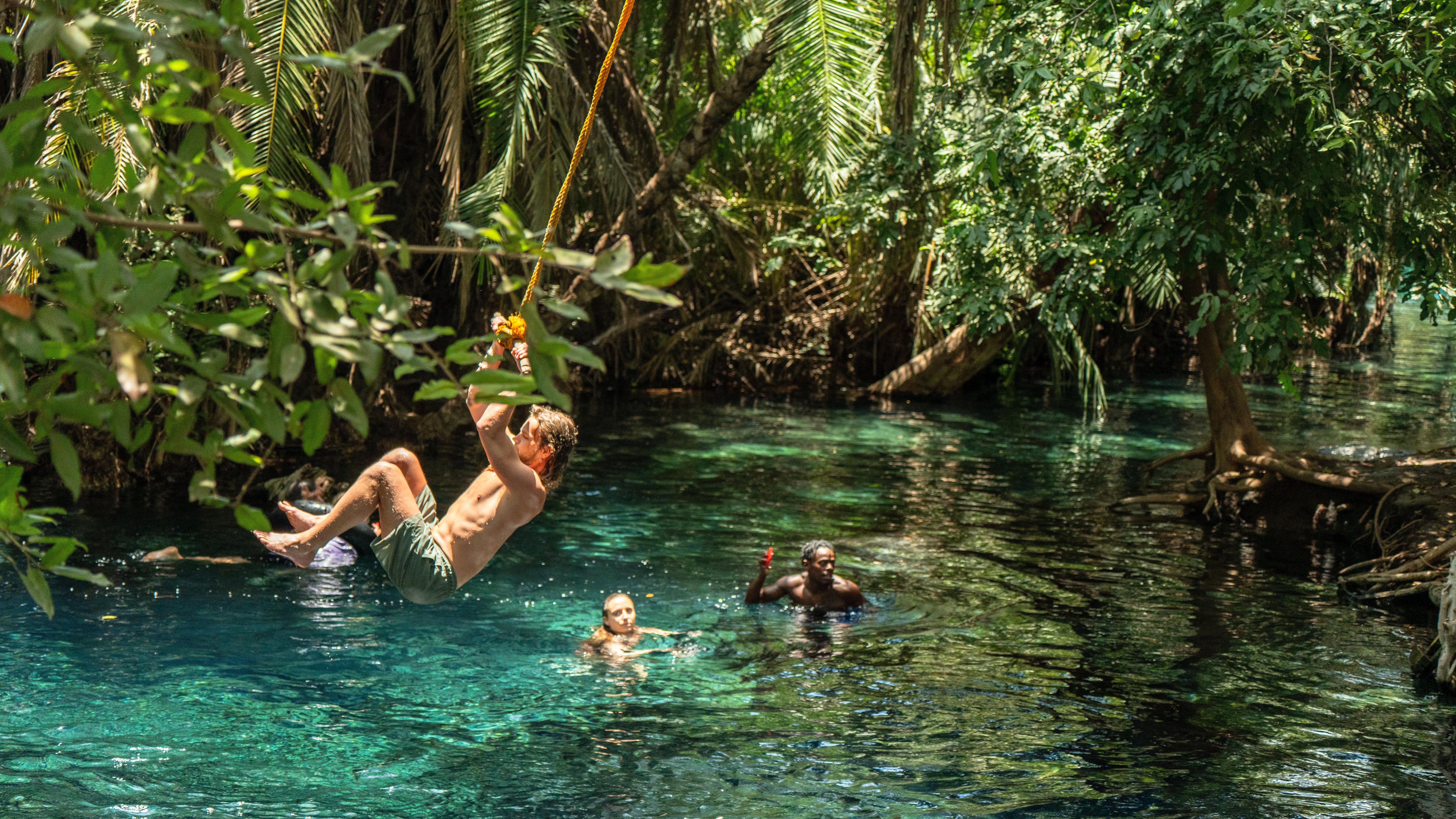
Explore a traditional Chagga village, hike to a 90-meter cascade, and unwind in turquoise thermal pools
Reserve
10 hr
Discover cascading falls, traditional coffee culture, geothermal springs, and Arusha's vibrant heart in one remarkable day.
ReservePrices from verified partners. Availability updates in real time at checkout. Free cancellation policies apply where shown.
The landmarks, rooms, and views travelers on this tour remember — all visible on a single visit.
Dense vegetation home to colobus monkeys and exotic bird species.
A common stopping point featuring rustic wooden structures.
Unique dark, fertile soil characteristic of the mountain slopes.
Historical areas showcasing local indigenous traditions near the base.
Observe rare high-altitude plant life as you ascend.
They complement each other; most visitors who do both call the multi-day trek the more rigorous mountaineering challenge, while the kilimanjaro day hike from arusha offers a sensory introduction to the lower slopes. The former is a high-altitude expedition, whereas the latter serves as a focused rainforest trekking experience.
| Feature | Top pick Day Hike | Multi-Day Trek |
|---|---|---|
Physical Intensity |
Moderate | High to extreme |
Altitude Gain |
Low (up to 3,000m) | High (up to 5,895m) |
Gear Required |
Day pack and hiking boots | Full expedition gear and camping equipment |
Time Commitment |
One day | Five to nine days |
Success Probability |
N/A | 60% to 80% per operator |
Cost |
70 USD plus operator fees | 1,500 USD to 4,000 USD |
| See tickets → |
Verdict: Choose the kilimanjaro day hike from arusha tour if time is limited, or book the multi-day trek if you require summit access and comprehensive mountain exposure for your kilimanjaro day hike from arusha tickets.
Choose your ticket, select your date, and reserve in under two minutes. Secure checkout handled by our verified partner.
Instant confirmation by email, with a mobile voucher you can save offline. No printing, no queuing at a collection desk.
Arrive at the entrance, show your voucher on your phone, and walk in. Most tickets include priority or skip-the-line access.
Practical details for your visit straight from our verified partners — hours, access, rules, and how to get there.
Arusha, Tanzania
Common pickup point for organized tours
Private transport is the most reliable way to reach the gate for a kilimanjaro day hike from arusha.
Hire a registered taxi from Arusha for door-to-door access.
Wear moisture-wicking base layers and a sturdy, waterproof jacket for a kilimanjaro day hike from arusha. Sturdy hiking boots with ankle support are essential for the uneven volcanic terrain.
Hikers should carry a lightweight daypack containing only essential personal items. All visitors must register at the park gate during a kilimanjaro day hike from arusha tour.
Photography is permitted throughout the trail, though drones require specific permits from the Tanzanian authorities. Capture the diverse flora found during your kilimanjaro day hike from arusha.
The terrain for a kilimanjaro day hike from arusha involves steep, uneven paths and high-altitude conditions. It is not suitable for individuals with mobility impairments or severe respiratory issues.
Mobile reception is intermittent at the park gate and often unavailable on the trail. Use your device for photography, but rely on printed maps for your kilimanjaro day hike from arusha.
Children under 12 are generally not permitted on high-altitude trekking routes for a kilimanjaro day hike from arusha. Consult with your guide regarding age-appropriate trail sections.
Pack at least 2 liters of water and high-energy snacks for your kilimanjaro day hike from arusha. Guided tours typically include a packed lunch to sustain energy levels at higher elevations.
Pets are strictly prohibited within Kilimanjaro National Park boundaries. Only authorized service animals may be considered with prior written approval from park management.
Always follow the instructions of your certified mountain guide for a safe kilimanjaro day hike from arusha. Stay on marked paths to protect the sensitive mountain ecosystem.
Best time to go, insider tips, nearby landmarks, and the cancellation fine print — flip through to skim what matters to you.
How crowds, weather, and events shift across the year.
Clearer skies and warmer temperatures make for ideal conditions.
The dry season offers the best visibility for a kilimanjaro day hike from arusha.
The short rainy season brings lush vegetation but muddier trails.
Dry weather returns, ideal for those seeking clear mountain vistas.
Small details that turn a good visit into a great one.
Drink water before you feel thirsty to manage altitude effects.
Temperatures fluctuate significantly during a kilimanjaro day hike from arusha.
Verify that all equipment is in good condition before departing Arusha.
Carry out all trash to keep the park pristine.
Your guide knows the specific challenges of a kilimanjaro day hike from arusha.
Non-bookable sights within a short walk — free to visit, easy to pair.
A scenic cascade located near the base of the mountain.
A tranquil volcanic lake perfect for bird watching.
Flexible, no hidden fees.
Cancellations must be requested at least 48 hours in advance to receive a partial refund. Please note that the 70 USD conservation fee is non-refundable per Kilimanjaro National Park regulations.
Hand-picked options within walking distance — pick a district for vibe, or a specific hotel for convenience.
Upscale lodge set within a working coffee plantation.
Convenient base with easy access to city transport.
Mount Kilimanjaro rises 5,895 metres from the East African plateau, but fewer than one visitor in fifty walks its lower slopes on a single-day trek. The Machame Route, carved through montane rainforest in the 1960s by timber cutters and later repurposed as a climbing corridor, begins at 1,640 metres and climbs through dense canopy where colobus monkeys descend at midday and blue monkeys occupy the mid-storey forks. The first three kilometres cross a transition zone where cultivated coffee terraces give way to wild fig and camphor trees, their roots gripping volcanic ash deposited across fifteen millennia of eruptions. Kilimanjaro National Park, established in 1973 and expanded to 1,688 square kilometres by 2005, protects five distinct vegetation belts that compress the ecological range of an entire continent into a vertical span shorter than the distance from Arusha to Moshi. The lower montane forest, accessed on day hikes from the city, holds more than four hundred plant species, including the endemic Impatiens kilimanjari, a pale violet balsam that flowers only between 1,700 and 2,400 metres. The forest canopy absorbs two metres of rainfall annually, feeding seventeen glacial streams that descend to irrigate the Chagga farmland below. By contrast, the summit ice cap, visible on clear mornings from the trailhead, receives less than two hundred millimetres and has retreated eighty-five per cent since 1912, leaving only 1.76 square kilometres of glacial cover as of the most recent aerial survey. A kilimanjaro day hike from arusha typically follows the Machame Gate route to Mandara Hut or a comparable waypoint, ascending six to eight kilometres through the rainforest zone before returning the same afternoon. The trail surface alternates between red laterite and exposed basalt, with gradient sections reaching eighteen per cent. Endemic species concentrate in the understory: the Kilimanjaro tree hyrax, active at dawn, and the four-toed elephant shrew, which occupies moss-covered logs. The forest's acoustic signature shifts with altitude—hornbills dominate below 1,800 metres, replaced by white-naped ravens and alpine swifts above the canopy break. The conservation fee, set at seventy US dollars per person per day excluding VAT, funds ranger patrols and trail maintenance across sixteen official routes. Kilimanjaro remains one of the few equatorial mountains where a single-day ascent offers tangible contact with montane ecosystems without multi-day acclimatisation. The trek delivers vertical gain, intact forest, and a return to Arusha by dusk—all within the twelve-hour window that defines the kilimanjaro day hike from arusha experience.

"The forest canopy absorbs two metres of rainfall annually, feeding seventeen glacial streams that descend to irrigate the Chagga farmland below."
A step-by-step walkthrough of the visit — what you'll see, how long each stage takes, and the details that matter.
You leave Arusha at dawn, the road climbing through coffee smallholdings where mist still clings to the lower slopes. At Machame Gate, rangers check permits while porters redistribute water and provisions. The trail enters the forest at 1,640 metres, the air ten degrees cooler than the city you left an hour earlier. The first kilometre is broad and gentle, red soil packed smooth by decades of foot traffic, then the gradient lifts and the canopy closes overhead. You pass giant ferns taller than a person, their fronds dripping with condensation. Colobus monkeys watch from the mid-storey, black and white against the green. The trail switchbacks through sections where tree roots form natural steps, the forest floor carpeted in moss and decomposing leaves. At around 2,000 metres, the vegetation shifts—camphor gives way to podocarpus, and the understory thins. You reach a clearing where the summit appears through a gap in the trees, snow-streaked and impossibly distant. The turnaround point comes at a rocky outcrop or a ranger hut, depending on your group's pace. You pause for lunch, the forest quiet except for the calls of silvery-cheeked hornbills. The descent is faster, your legs taking the gradient in long strides, and by mid-afternoon you are back at the gate. The drive to Arusha takes ninety minutes, the mountain shrinking in the rear window as the road drops back into the heat of the plateau.
The park is open daily from 06:00–18:00.
Yes, the entrance fee is 70 USD (Conservation fee per person per day, excluding 18% VAT).
The best arrival window is 06:00–09:00 for optimal trekking conditions.
It is recommended to arrange your kilimanjaro day hike from arusha tours through authorized operators in advance.
Generally, the trek is not recommended for young children due to the high-altitude terrain.
Bring sturdy hiking boots, a waterproof jacket, water, and sun protection.
Yes, the trek involves sustained climbing and significant elevation gain.
Reception is limited, but you may use your phone for photography.
Most visitors reach the gate via a 2-3 hour drive from Arusha.
Cancellations require 48 hours notice for a partial refund; the 70 USD conservation fee is non-refundable.